
No products in the cart.

 Tiếng Việt
Uncategorized @vi
Charcoal Grill vs Charcoal Oven: Which One Cooks Better-Tasting Meat?
Many people believe that cooking great-tasting grilled meat simply requires high-quality charcoal or the right marinade. In reality, these are only part of the equation. The final quality of grilled food also depends heavily on how heat is generated, retained, and circulated throughout the cooking process.
This is why professional BBQ chefs pay attention not only to ingredients and seasoning, but also to the principles of closed-lid grilling. When heat is properly controlled and evenly distributed, the meat cooks more consistently from the outside in, retains more moisture, and is less likely to become burnt on the surface while remaining undercooked inside.
So, what creates the difference between a charcoal grill and a charcoal oven? Before comparing these two types of cooking equipment, let’s first understand how meat actually cooks over charcoal.
What Types of Heat Cook Meat?
To understand why some charcoal grills produce tender, juicy, and evenly cooked meat while others can easily dry it out or burn the surface, it is important to first understand how heat affects food.
When cooking meat over charcoal, three main types of heat work together to cook the food:
1. Radiant Heat
Radiant heat is emitted directly from the glowing charcoal in the form of infrared radiation. It travels straight from the charcoal to the surface of the meat, quickly browning and searing the exterior while creating the appealing colour and distinctive aroma associated with grilled food.
On a traditional open charcoal grill, radiant heat is the primary heat source because the meat is positioned directly above the charcoal.
2. Convection Heat
In addition to the direct heat from the charcoal, the air inside the grill is also heated and circulates continuously around the meat. This flow of hot air allows heat to reach every surface of the food, helping it cook evenly from multiple directions rather than only from below.
Convection heat is especially important when cooking thick cuts of meat, whole chickens, or BBQ ribs, as it allows the interior to cook gradually without burning the outer surface.
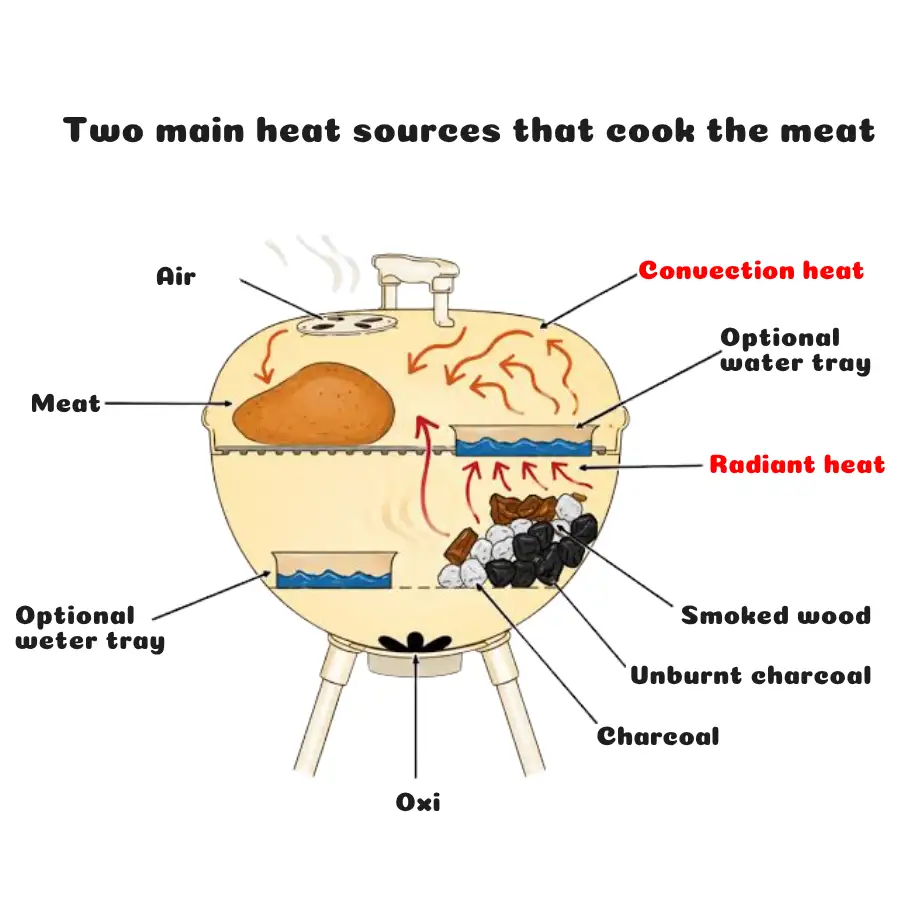
How Heat Works on Charcoal Grills and Charcoal Ovens
After understanding that meat cooks through three main types of heat—radiant heat, convection heat, and conduction heat—the next question is: why does a charcoal oven often cook food more evenly and keep it juicier than a traditional open charcoal grill? The answer lies in the principle of closed-lid cooking.
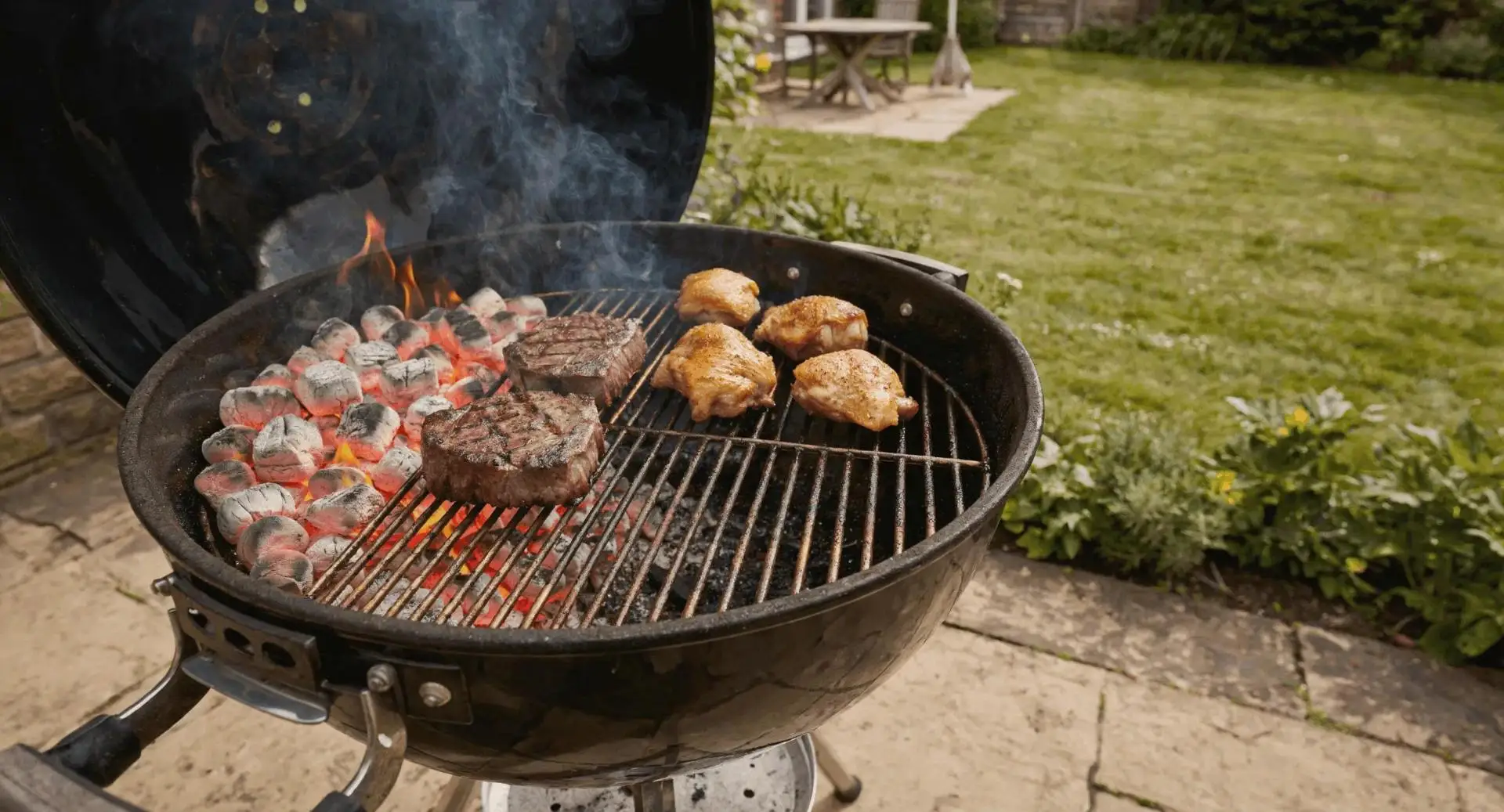
Open Charcoal Grill: Continuous Heat Loss
On a traditional open charcoal grill, the glowing charcoal transfers heat directly to the meat. However, much of the hot air rises and quickly escapes into the surrounding environment.
The process can be illustrated as follows:
Charcoal → Meat → Heat escapes into the air
As a result, it is difficult to maintain a stable temperature around the cooking area. To cook the meat evenly, the person grilling often needs to turn the food frequently, move it to different positions, or add more charcoal during the cooking process.
Without careful heat control, the outside of the meat can easily become burnt or overcooked while the inside remains undercooked.
Charcoal Oven: Turning Lost Heat into Useful Heat
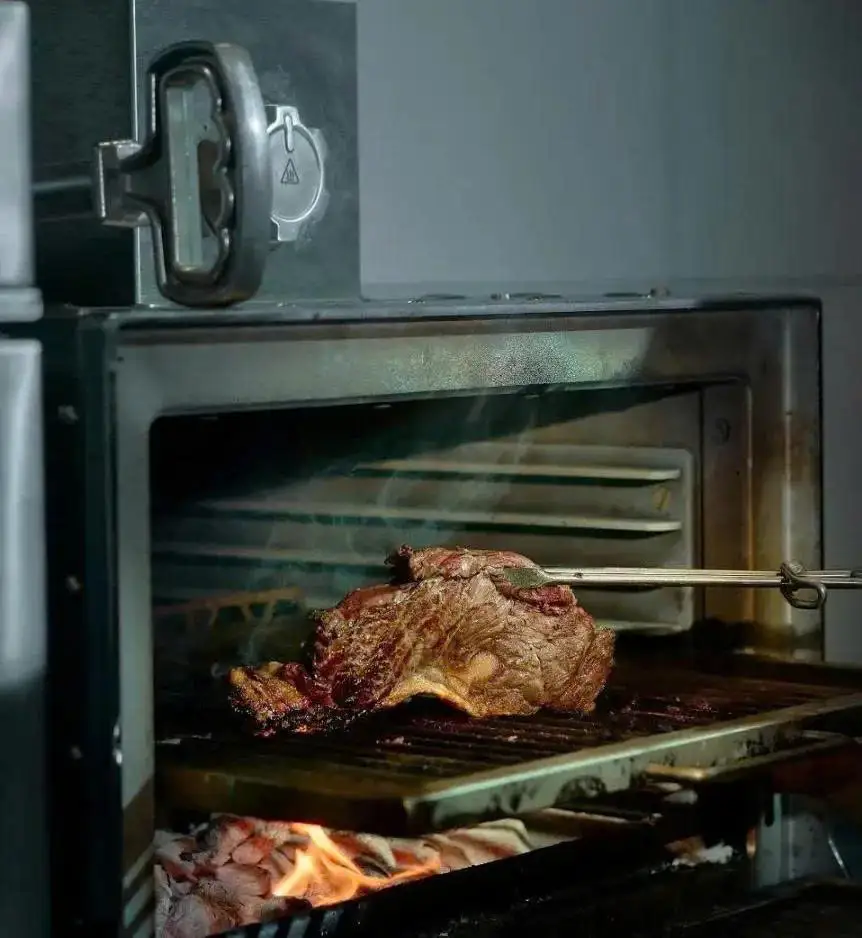
Unlike an open grill, a charcoal oven is designed with a lid and an enclosed cooking chamber. Instead of allowing heat to escape into the surrounding air, most of it is retained and continuously circulated inside the oven.
The process can be illustrated as follows:
Glowing charcoal → Circulating hot air → Heat reflected from the lid and oven walls → Meat cooks from multiple directions
In other words, the meat receives heat not only from below, but also from the hot air circulating around it and the heat reflected from all sides. This is the key factor that creates a clear difference between the two cooking methods.
Why Is Closed-Lid Cooking More Effective?
Closed-lid cooking works effectively because several factors work together:
- The lid retains heat and reduces the amount of heat lost to the surrounding environment.
- The oven walls reflect heat back into the cooking chamber instead of allowing it to escape.
- Hot air continuously circulates around the food, helping the meat cook evenly from all sides.
- Moisture and steam are retained more effectively, slowing down moisture loss and helping the meat stay tender and juicy after cooking.
- The temperature inside the oven remains more stable, making the cooking process easier to control and reducing the risk of localized burning.
As a result, instead of relying mainly on radiant heat from the charcoal as an open grill does, a charcoal oven makes effective use of all three heat-transfer methods: radiation, convection, and conduction.
This same principle is applied in most professional BBQ ovens, helping food cook evenly, develop an attractive golden-brown exterior, and retain its juiciness and flavour on the inside.
Why Does Closed-Lid Cooking Make Meat Taste Better?
Compared with traditional open charcoal grilling, closed-lid cooking uses heat more efficiently, which can noticeably improve the quality of grilled food.
Keeps Meat Juicier
The enclosed cooking chamber reduces heat and moisture loss, helping the meat retain more of its natural juices and remain tender after cooking.
Cooks Meat More Evenly
Hot air circulates around the food while heat is reflected from the lid and the walls of the grill. This allows the meat to cook from multiple directions and reduces the risk of burning the outside while leaving the inside undercooked.
Requires Less Frequent Turning
Because heat is distributed more evenly, the meat does not need to be turned constantly. This helps preserve the surface, reduce moisture loss, and produce a more attractive final result.
Makes Temperature Control Easier
A closed charcoal oven maintains a more stable cooking temperature, making it easier to control both heat and cooking time while reducing the risk of burning the food.
Better for Thick Cuts of Meat
Thanks to convection heat, a charcoal oven is well suited to foods that require longer cooking times, such as thick steaks, BBQ ribs, and whole chickens. It helps them cook evenly while remaining tender and juicy.
Direct Comparison: Charcoal Grill vs Charcoal Oven
After understanding the principles of closed-lid cooking, it becomes clear that the differences between a charcoal grill and a charcoal oven are not limited to their design. They also affect cooking performance and the final quality of the food.
| Criteria | Charcoal Grill | Charcoal Oven |
|---|---|---|
| Heat retention | Low, as heat escapes easily | High, as heat is retained inside the cooking chamber |
| Cooking evenness | Food may cook unevenly | Food cooks evenly from multiple directions |
| Meat juiciness | Meat can dry out during longer cooking | Retains moisture and tenderness more effectively |
| Temperature control | More difficult and requires frequent monitoring and turning | Easier to adjust, with a more stable temperature |
| Cooking large cuts | Limited | Suitable for thick steaks, BBQ ribs, and whole chickens |
| Charcoal consumption | Higher due to heat loss | More efficient because heat is retained |
| Smoke control | More smoke and harder to control | Easier to control due to more stable combustion |
| Suitable foods | Thinly sliced meat, seafood, and vegetables | Versatile enough for both thin foods and large cuts of meat |
Overall, a charcoal grill is well suited to quick, simple cooking and a lower initial budget. A charcoal oven, on the other hand, offers clear advantages when cooking foods that require stable heat, longer cooking times, and more consistent results.
When Should You Choose a Charcoal Grill?
Although a charcoal oven offers several advantages in terms of heat retention and cooking performance, a traditional charcoal grill is still the better choice in certain situations:
- You need a compact, portable option for picnics or camping.
- You mainly cook quick foods such as seafood, thin slices of meat, sausages, or vegetables.
- You usually cook for a small group.
- You want to keep the initial investment low.
For simple and casual grilling, a traditional charcoal grill can still meet your needs effectively.
When Should You Choose a Charcoal Oven?
A charcoal oven is most effective when you want more consistent cooking results and greater versatility. It is a suitable choice if you:
- Regularly host BBQ parties at home on weekends.
- Enjoy American-style BBQ.
- Often cook thick steaks, BBQ ribs, whole chickens, or other large cuts of meat.
- Cook for a large family or outdoor gatherings.
- Want meat to cook evenly, retain its juiciness, and be easier to control.
If you see BBQ as a complete cooking experience rather than simply a way to cook food over charcoal, a charcoal oven is well worth considering because it makes full use of closed-lid cooking.
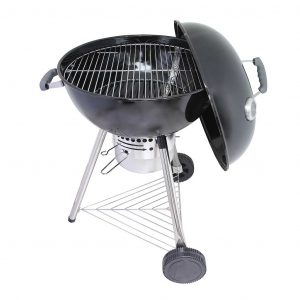
Kettle Grill
Enjoy Better Grilling with a Kettle Grill
Grill directly over charcoal with the lid open, or close the lid to cook with circulating heat like a charcoal oven. A modern Kettle Grill offers versatile cooking, excellent durability, delicious results, and great value for money.

Conclusion
Both charcoal grills and charcoal ovens have their own advantages and are suited to different cooking needs. If you only need a simple appliance for quick grilling during picnics, camping trips, or small meals, a traditional charcoal grill remains a practical choice.
However, if you want food to cook more evenly, retain more moisture, and be easier to control, while also allowing you to prepare a wider variety of dishes such as steaks, BBQ ribs, and whole chickens, a charcoal oven offers clear advantages thanks to its closed-lid cooking system.
Hopefully, this article has shown that the quality of grilled food depends not only on the type of charcoal or the marinade, but also on how effectively the cooking equipment retains and distributes heat. Choosing the right grill or oven will help you create more delicious, consistent, and enjoyable BBQ experiences.
