Low and Slow BBQ is more than just a way of cooking meat—it is the soul of American barbecue, especially the iconic Texas style. Instead of grilling quickly over high heat, Low and Slow uses low, steady temperatures over many hours, combined with natural wood smoke, to transform large, tough cuts into tender, flavorful meat infused with deep smoky character. In this article, you’ll learn how Low and Slow BBQ works in real-world cooking, why it is the foundation of authentic American barbecue, and how choosing the right BBQ smoker can determine your success from the very first cook.
What is Low and Slow BBQ?
Low and Slow BBQ is a cooking technique that uses low temperatures over a long period of time, combined with natural wood smoke, to create the signature flavors of American barbecue—especially the Texas style. Instead of cooking meat quickly over direct high heat, Low and Slow allows the meat to cook gradually, giving connective tissues and fat time to slowly break down and melt. The result is meat that is noticeably more tender, juicy, and deeply flavorful than what can be achieved with conventional grilling methods.
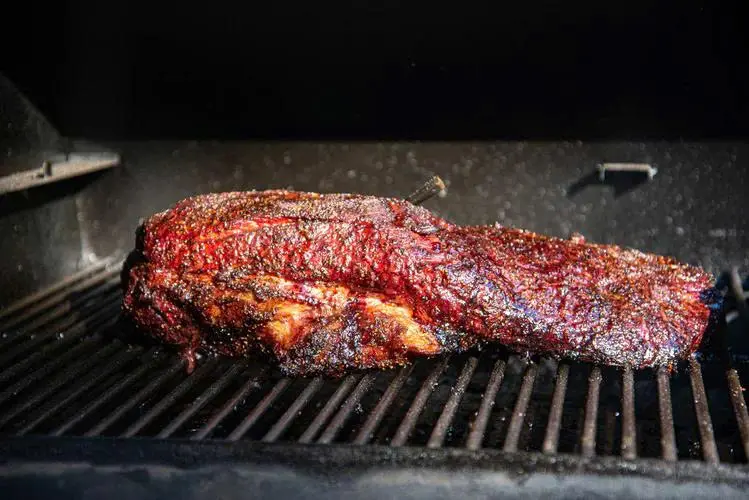
A piece of meat cooked low and slow.
Defining Low and Slow BBQ
At its core, Low and Slow BBQ is built on three essential elements:
Low temperature: Meat is cooked at a temperature range of 105–130°C (225–275°F), which is hot enough to cook it thoroughly from the inside without burning the exterior.
Long cooking time: The cooking process typically lasts from several hours to more than 12 hours, depending on the type of meat and its size. This extended time allows collagen to gradually break down into gelatin, creating the signature tenderness associated with authentic BBQ.
Indirect heat combined with wood smoke: The meat is not placed directly over the fire. Instead, it is cooked by gentle heat and circulating wood smoke inside the cooking chamber, producing a deep, natural smoky flavor.
Together, these three elements form the foundation of Low and Slow BBQ—and clearly distinguish true American barbecue from faster, high-heat grilling methods.
How is Low and Slow different from grilling?
Many people often confuse Low and Slow BBQ with grilling, but in reality, these two methods are completely different in both purpose and results.
Criteria
Low and Slow BBQ
Grilling
Temperature
Low
High
Cooking time
Long
Fast
Heat source
Indirect
Direct
Flavor profile
Deep smoky flavor, tender texture
Charred, seared exterior
Low and Slow focuses on gradually cooking meat at low temperatures while allowing it to absorb clean wood smoke over time. Grilling, on the other hand, is designed for quick cooking over direct high heat, where the main goal is to create a seared or charred surface.
Because of these differences, large and tough cuts of meat—such as brisket or pork shoulder – are best suited for Low and Slow, while grilling works better for thin cuts and foods that cook quickly.
Low and Slow is an advanced grilling and barbecue technique designed to create important transformations within the meat—resulting in a flavor and texture that are completely different from fast, high-heat cooking. By cooking at low temperatures over many hours and combining gentle heat with natural wood smoke, Low and Slow produces structure and depth of flavor that quick grilling or direct-heat methods simply cannot replicate.
Collagen and fat breaking down slowly – The key to tenderness
Many cuts of meat become tough when cooked quickly, especially cuts with large amounts of connective tissue such as beef brisket, pork shoulder, beef ribs, and pork ribs. Low and Slow addresses this by maintaining low temperatures over an extended period, allowing tough connective tissue—known as collagen—to gradually break down into gelatin. This process creates meat that is tender, juicy, and easy to enjoy.
At the same time, fat within the meat melts slowly and redistributes through the muscle fibers, adding richness and moisture without making the meat greasy. This slow transformation is what makes Low and Slow BBQ so deeply satisfying and uniquely flavorful.
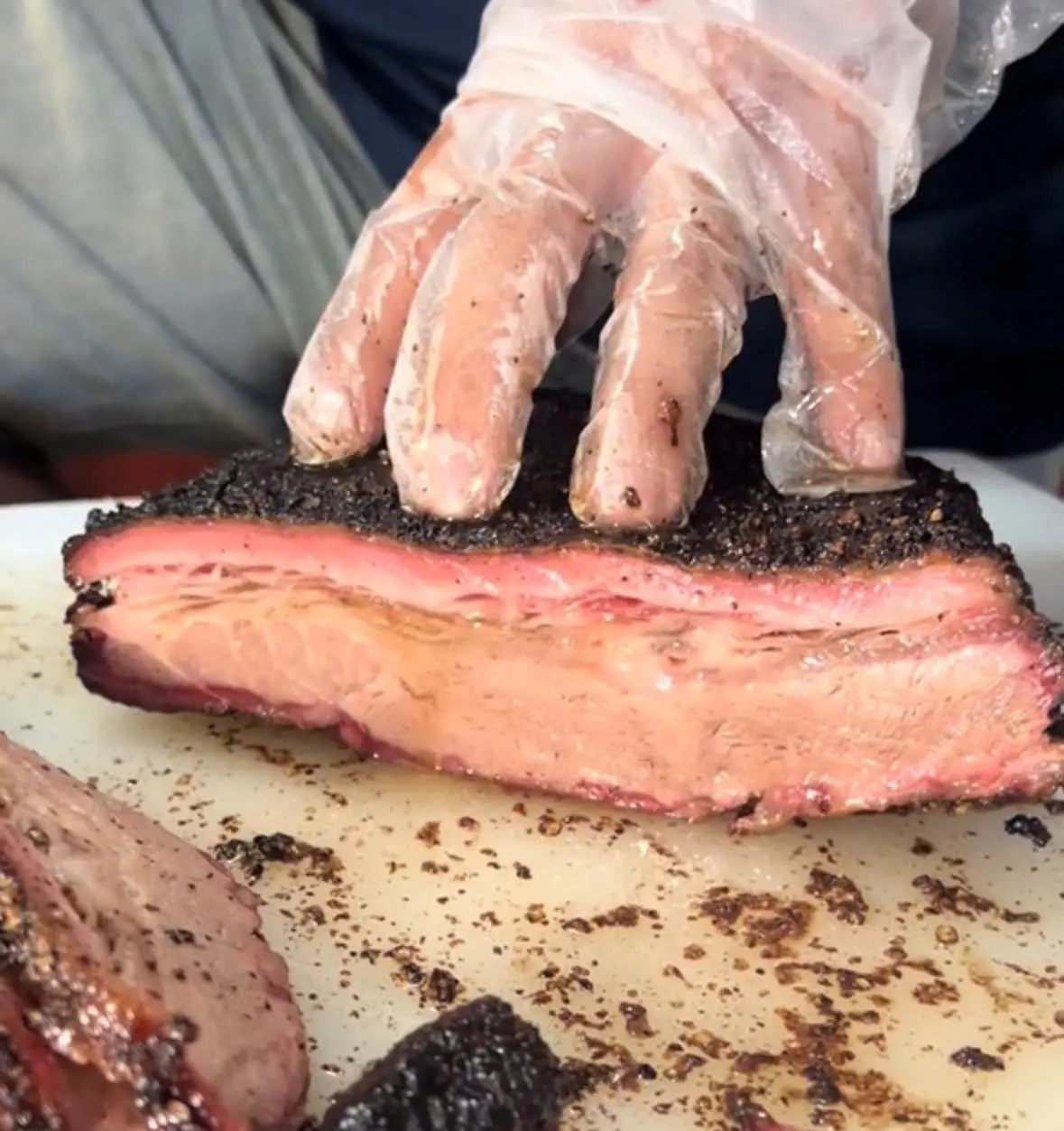
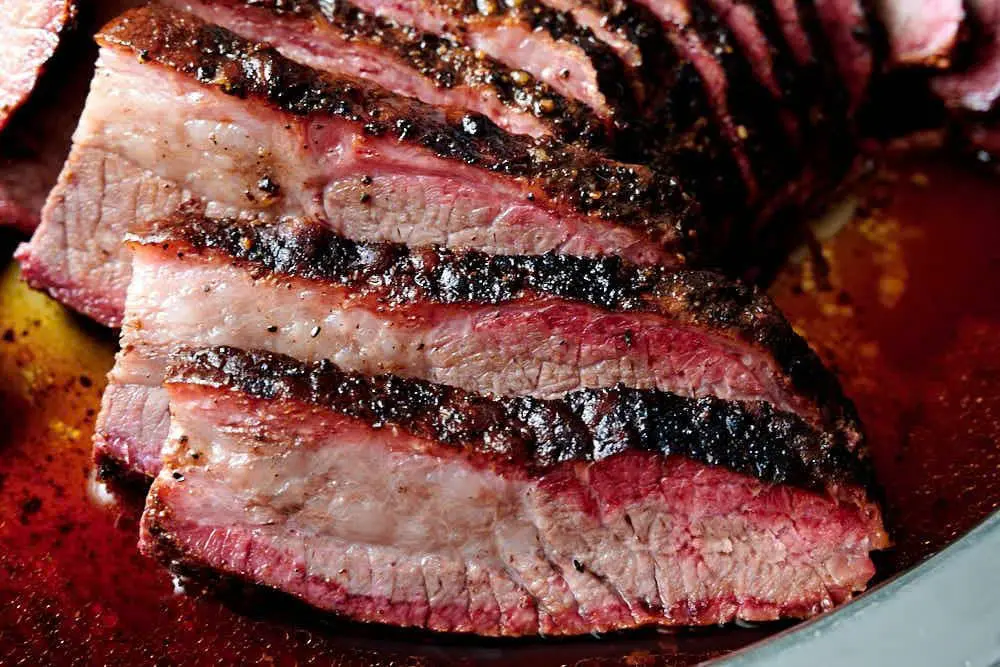
Tender, juicy smoked beef brisket
Smoke ring & Bark
A piece of authentic American BBQ is often recognized by two key visual characteristics: the smoke ring and the bark.
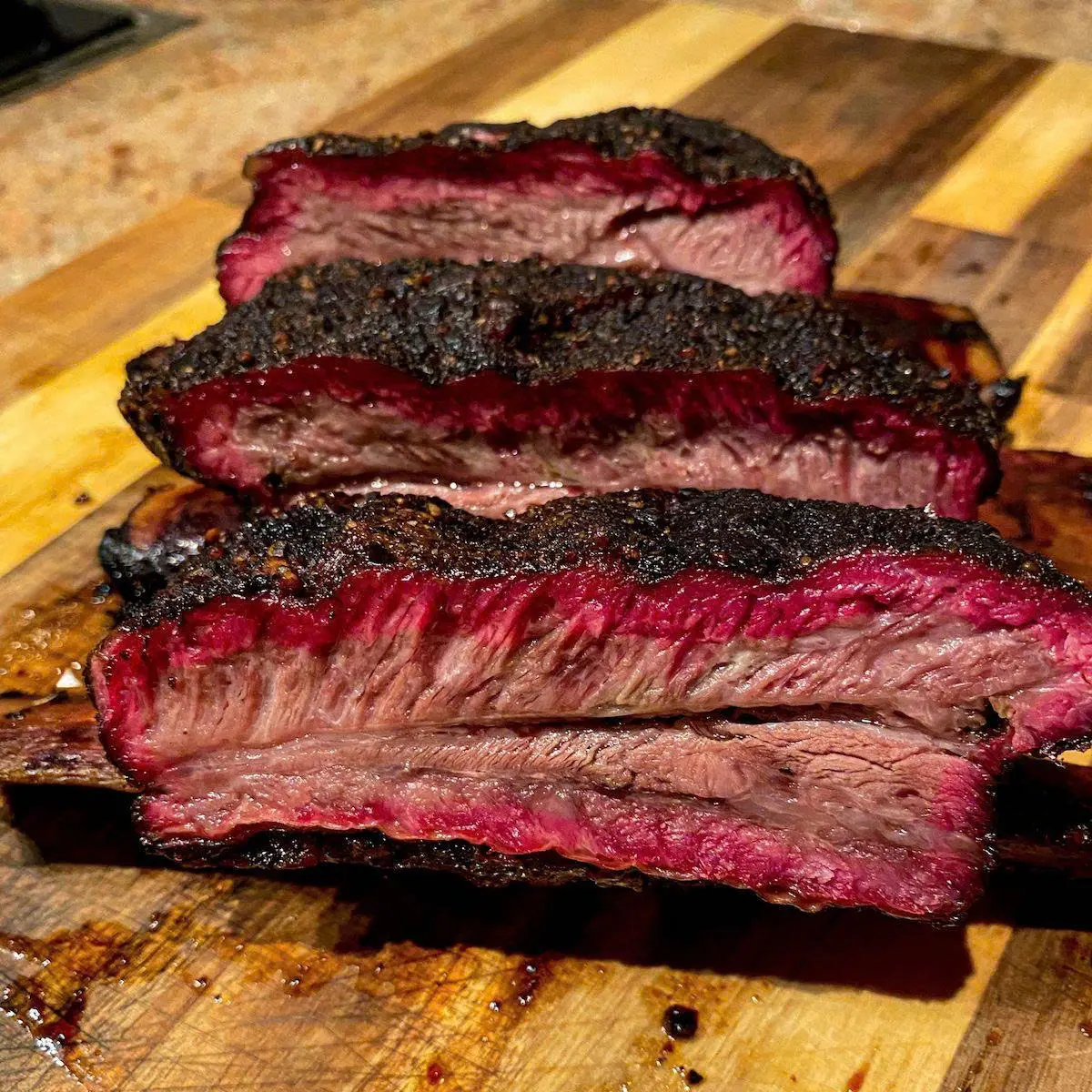
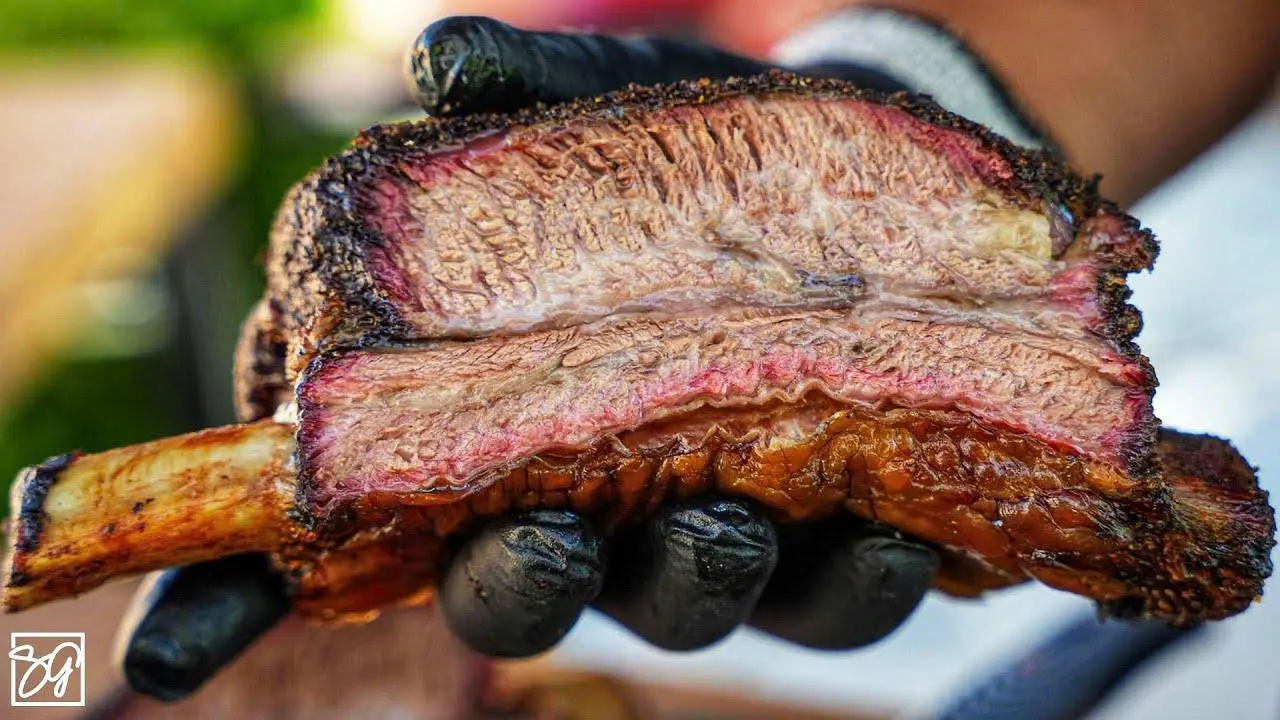
The smoke ring is a light pink layer just beneath the surface of the meat. It forms as a result of a chemical reaction between wood smoke and the proteins in the meat when it is cooked at low temperatures. While it adds visual appeal, the smoke ring is also an indicator that the meat was cooked properly in a stable, smoke-rich environment.
A smoke ring on beef ribs cooked using the low and slow method.
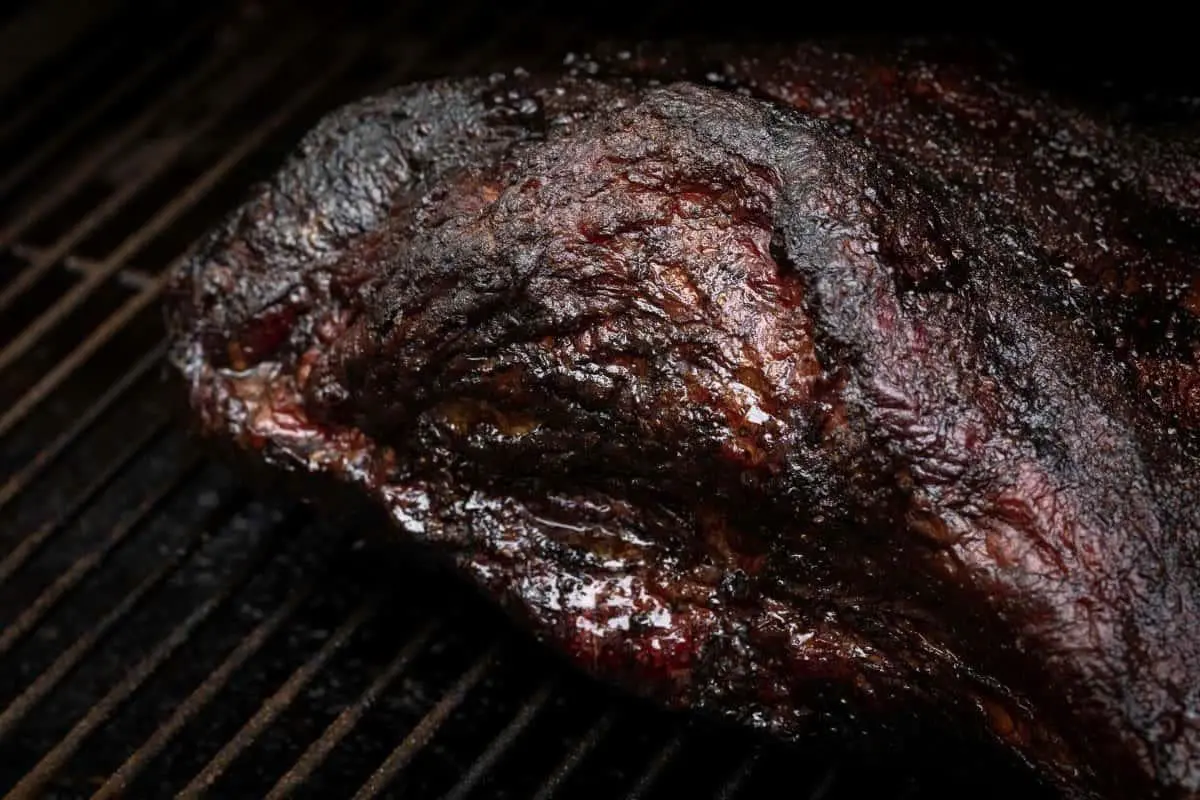
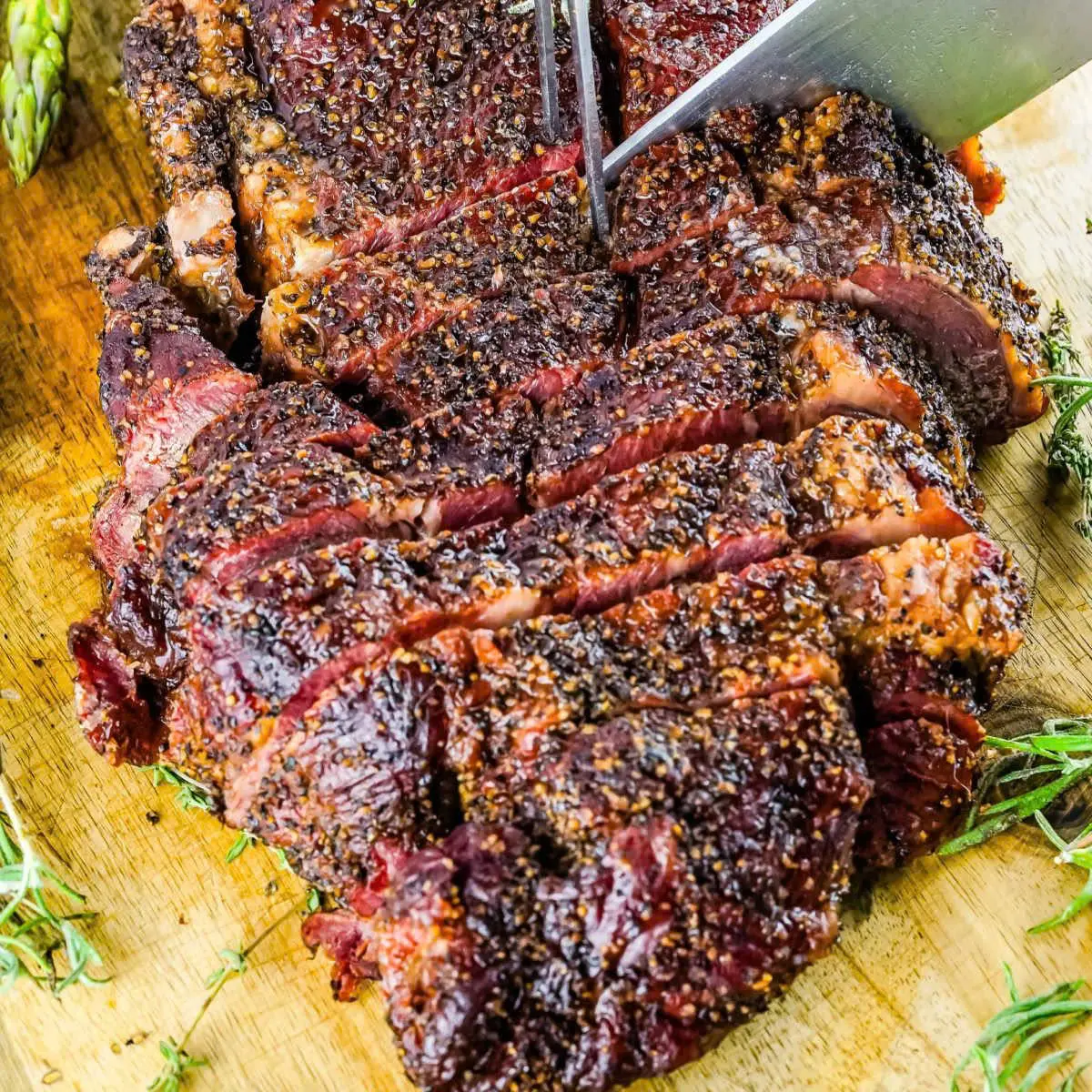
The bark is the dark, flavorful crust that forms on the outside of the meat as a result of the combined effects of wood smoke, dry seasoning (rub), and time. This rich, slightly crisp exterior creates a perfect contrast with the tender, juicy meat inside and is one of the defining characteristics of well-executed Low and Slow BBQ.
The bark crust formed after low and slow cooking
Both the smoke ring and the bark are difficult—if not nearly impossible—to develop when cooking quickly or grilling directly over high heat.
Natural wood smoke flavor
Low and Slow BBQ relies on smoke from dedicated smoking woods, not the harsh, burnt smoke produced by overheated charcoal. In Texas-style BBQ, popular woods such as hickory, oak, and mesquite deliver a clean, pronounced, and deep smoke flavor that slowly penetrates the meat throughout the cooking process.
Unlike the sharp and bitter taste of heavy charcoal smoke, the smoke flavor in Low and Slow BBQ is smooth, balanced, and long-lasting on the palate. This is what gives authentic American BBQ its distinctive aroma—one that you can recognize the moment you lift the lid of a smoker.
Top classic BBQ meats that require Low and Slow
Not every dish requires the Low and Slow method, but for large cuts of meat with high amounts of collagen and fat, slow cooking at low temperatures is essential to achieve authentic American BBQ flavor. Below are some classic BBQ meats that are closely associated with the Low and Slow technique and are often considered a true test of any BBQ enthusiast’s skill.
Texas-Style Brisket (Smoked Beef Brisket)
Brisket is widely regarded as the icon of Texas BBQ. This cut contains a high amount of connective tissue and can be extremely tough if cooked incorrectly. With Low and Slow cooking, the collagen in brisket has time to gradually break down into gelatin, resulting in meat that is tender, juicy, and rich in flavor, with a clearly defined smoke ring and a well-developed bark. It is a dish that is nearly impossible to execute properly without slow cooking and precise temperature control.
Texas smoked brisket
Beef Ribs (Dinosaur Ribs)
Beef ribs, often referred to as dinosaur ribs, are large, thick cuts with a high fat content. The Low and Slow method allows the fat to render gradually, basting the meat from within and creating a tender texture while still delivering a rich, satisfying bite. When cooked properly, the meat pulls cleanly from the bone while maintaining its structure, making beef ribs one of the most impressive results of true Low and Slow BBQ.
Low and slow–style beef ribs.
Pulled Pork (Pork Shoulder)
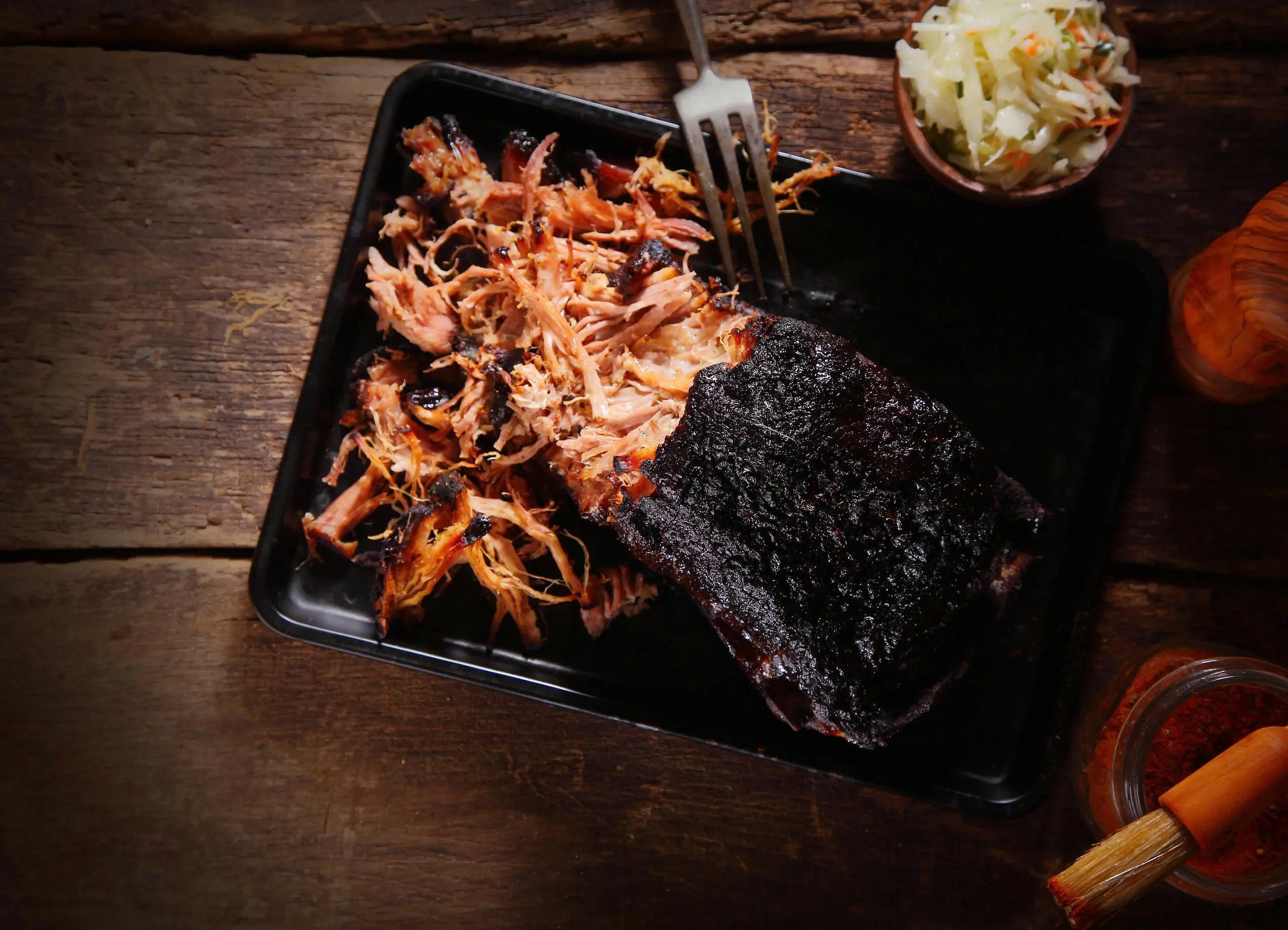
Pulled pork is made from pork shoulder, a cut rich in fat and collagen. With a long cooking time of 8–12 hours, the Low and Slow method breaks down connective tissue and renders fat slowly, resulting in meat that becomes tender enough to be easily pulled apart by hand. Deeply infused with smoke and seasoning, pulled pork is one of the most popular BBQ dishes in the United States and an ideal starting point for anyone new to Low and Slow BBQ.
Pork shoulder cooked low and slow, then pulled apart by hand.
Beef Chuck Roast
Beef chuck roast is often described as a “smaller version of brisket”—more approachable, yet still requiring slow cooking to achieve proper tenderness. When prepared using the Low and Slow method, this cut becomes tender, flavorful, and richly infused with smoke. It’s an excellent choice for family BBQ gatherings or for those who want to experience authentic American BBQ without committing to a large cut like full brisket.
A smaller, low and slow–cooked brisket-style cut for those who want wood-smoked flavor without the long wait.
Whole Smoked Chicken
Although it doesn’t require as much time as brisket or ribs, whole smoked chicken still benefits greatly from the Low and Slow approach. Cooking at a lower, steady temperature allows the chicken to cook evenly without drying out, while gentle wood smoke adds a subtle, refined flavor. This makes whole smoked chicken an excellent choice for getting familiar with a smoker and practicing temperature control skills.
How does Low and Slow work in practice?
Understanding the theory behind Low and Slow is one thing, but applying it successfully in real life is another story. Low and Slow is not simply about cooking for a longer time—it’s about precisely controlling how heat and smoke interact with the meat over many continuous hours. This is also why cooking equipment plays a crucial role in achieving authentic American BBQ.
The principle of indirect cooking
In Low and Slow BBQ, the meat is never placed directly over the fire. Instead, heat and smoke are generated in a separate area and then circulate evenly throughout the cooking chamber before reaching the food. This indirect cooking method allows gentle, consistent heat to cook the meat slowly from the inside out, without burning the surface.
Surrounded by steady heat and clean smoke for hours, the meat is effectively “bathed” in a low-temperature, smoky environment. This creates ideal conditions for collagen to break down, fat to render evenly, and smoke flavor to penetrate deeply—something direct, high-heat grilling simply cannot achieve.
Controlling the three critical factors
For Low and Slow to work properly, three key elements must be managed at the same time:
Stable temperature: Low and Slow requires low heat maintained consistently for many hours. Large temperature fluctuations can cause uneven cooking, dryness, or loss of tenderness.
Airflow: Airflow determines how the fire burns and how smoke moves through the cooking chamber. Too much airflow can spike the temperature, while too little can suffocate the fire and produce dirty smoke.
Clean smoke (thin blue smoke): Authentic American BBQ relies on thin, nearly invisible blue smoke. Thick white or black smoke usually creates harsh, bitter flavors that ruin the meat.
Maintaining all three of these factors over long cooking sessions is what makes Low and Slow challenging with standard grills—and why American pitmasters rely on BBQ smokers, which are specifically designed to control heat, airflow, and smoke with long-term stability.
Why is a BBQ smoker the ideal equipment for Low and Slow?
Low and Slow BBQ demands absolute stability over many continuous hours—something not every grill can deliver. While standard grills are designed for fast, high-heat cooking, BBQ smokers are purpose-built specifically for Low and Slow. From the way heat is generated and airflow is managed to long-term heat retention, smokers are engineered to support extended, low-temperature cooks. This is why smokers are the standard choice among American pitmasters.
How Is a Smoker Different from a Regular Grill?
The biggest differences lie in structure and airflow design.
Separate firebox and cooking chamber: A smoker generates heat and smoke in a dedicated area, separate from where the meat is placed. This prevents direct exposure to intense flames and allows the meat to cook gently using circulating heat and smoke instead.
Airflow designed for long, stable cooks: The intake vents, chimney, and cooking chamber are carefully designed to maintain consistent airflow. This keeps the fire burning evenly and ensures smoke travels smoothly through the chamber for hours at a time.
Better heat retention than standard grills: Smokers typically feature thicker steel bodies, tight-sealing lids, and superior insulation. This minimizes heat loss—an essential factor when maintaining low, steady temperatures over long cooking sessions.
These design advantages make BBQ smokers far more effective than traditional grills when it comes to true Low and Slow cooking.
Benefits of using a BBQ smoker for Low and Slow
When using a BBQ smoker, the Low and Slow process becomes easier to control and far less risky:
Easy to maintain 110–120°C (225–250°F): This is the “sweet spot” temperature range for Low and Slow BBQ. A smoker helps hold this temperature steadily without constant adjustments.
Consistent, clean smoke flavor: With controlled airflow and proper wood combustion, a smoker produces clean, thin blue smoke, allowing the meat to absorb deep smoke flavor without bitterness.
Ideal for overnight cooks: For long cooks lasting 10–14 hours—such as brisket or pulled pork—a smoker lets you cook for extended periods without constantly opening the lid or tending the fire every few minutes.
In other words, if Low and Slow is the core technique of American BBQ, then a BBQ smoker is the tool that makes that technique practical and consistent—especially for anyone who wants to recreate authentic Texas-style BBQ at home.
Popular types of BBQ Smokers
BBQ smokers come in a variety of designs, each suited to different cooking styles and experience levels. Understanding the differences between smoker types will help you choose the right equipment for Low and Slow BBQ—and avoid buying something that’s hard to control or unsuitable for long cooks.
Charcoal smokers use charcoal as the primary heat source, combined with wood chunks or wood chips to produce smoke. This is one of the most popular smoker types among BBQ enthusiasts because it delivers a bold, authentic smoke flavor that truly reflects the spirit of American BBQ.
Thanks to its strong and natural smoke profile, a charcoal smoker is especially well-suited for traditional Texas-style BBQ dishes such as brisket, beef ribs, and pulled pork. Managing a charcoal fire also helps cooks develop a deeper understanding of heat control and airflow—core skills required for mastering Low and Slow BBQ.
Offset Smoker – The American pitmaster standard
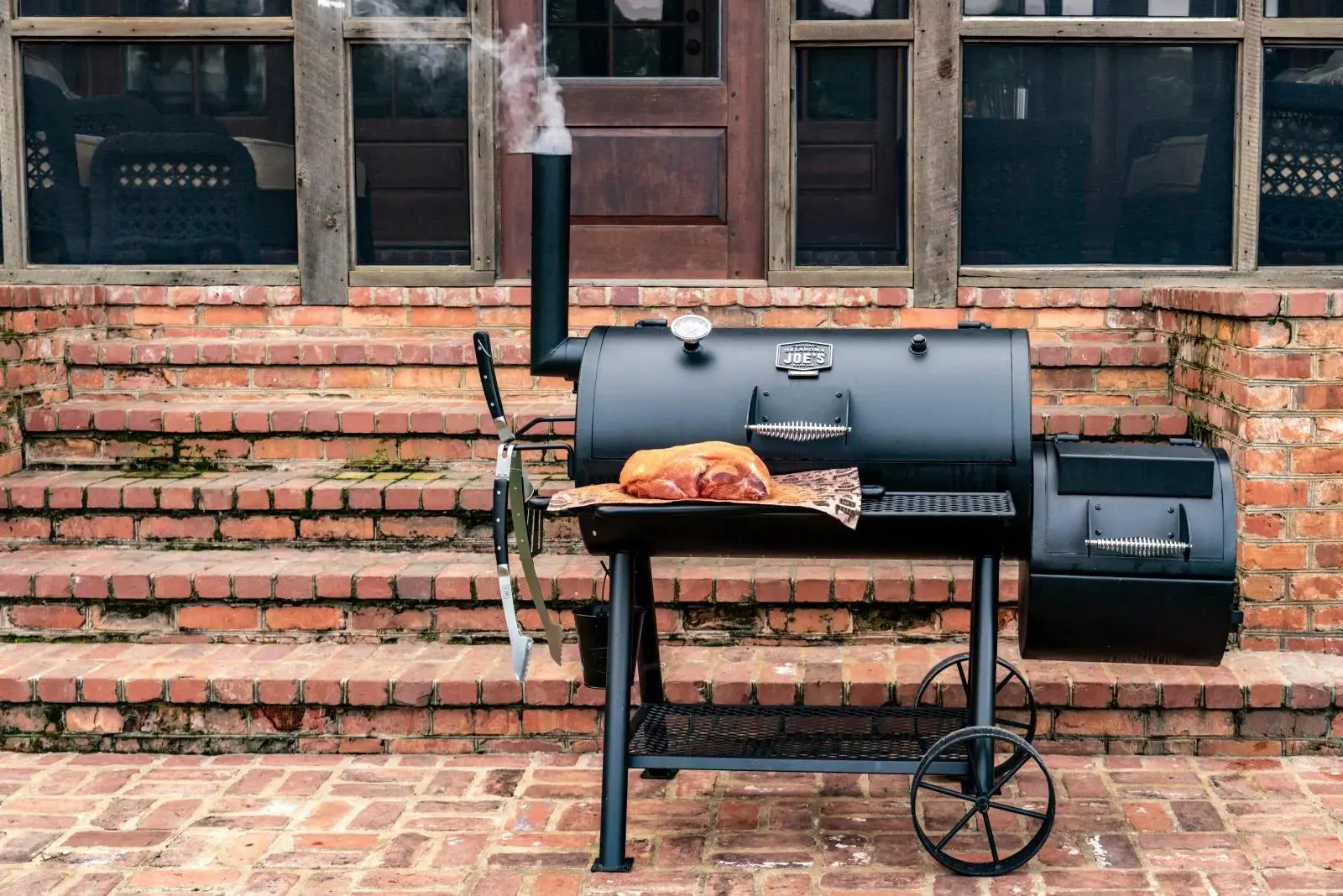
The offset smoker is an iconic symbol of Texas BBQ and is commonly used by professional pitmasters. Its defining feature is a separate firebox, where heat and smoke are generated independently from the main cooking chamber.
This design allows smoke to travel in a controlled, steady flow from the firebox, across the meat, and out through the chimney. As a result, the meat absorbs clean, deep, and evenly distributed smoke throughout long cooking sessions.
Offset smokers are ideal for those who want to cook large cuts of meat, handle extended cooking times, and pursue authentic American BBQ at a serious level.
An offset smoker (traditional smoker) makes low and slow cooking easier and more consistent
Vertical Smoker / Drum Smoker – Compact and efficient
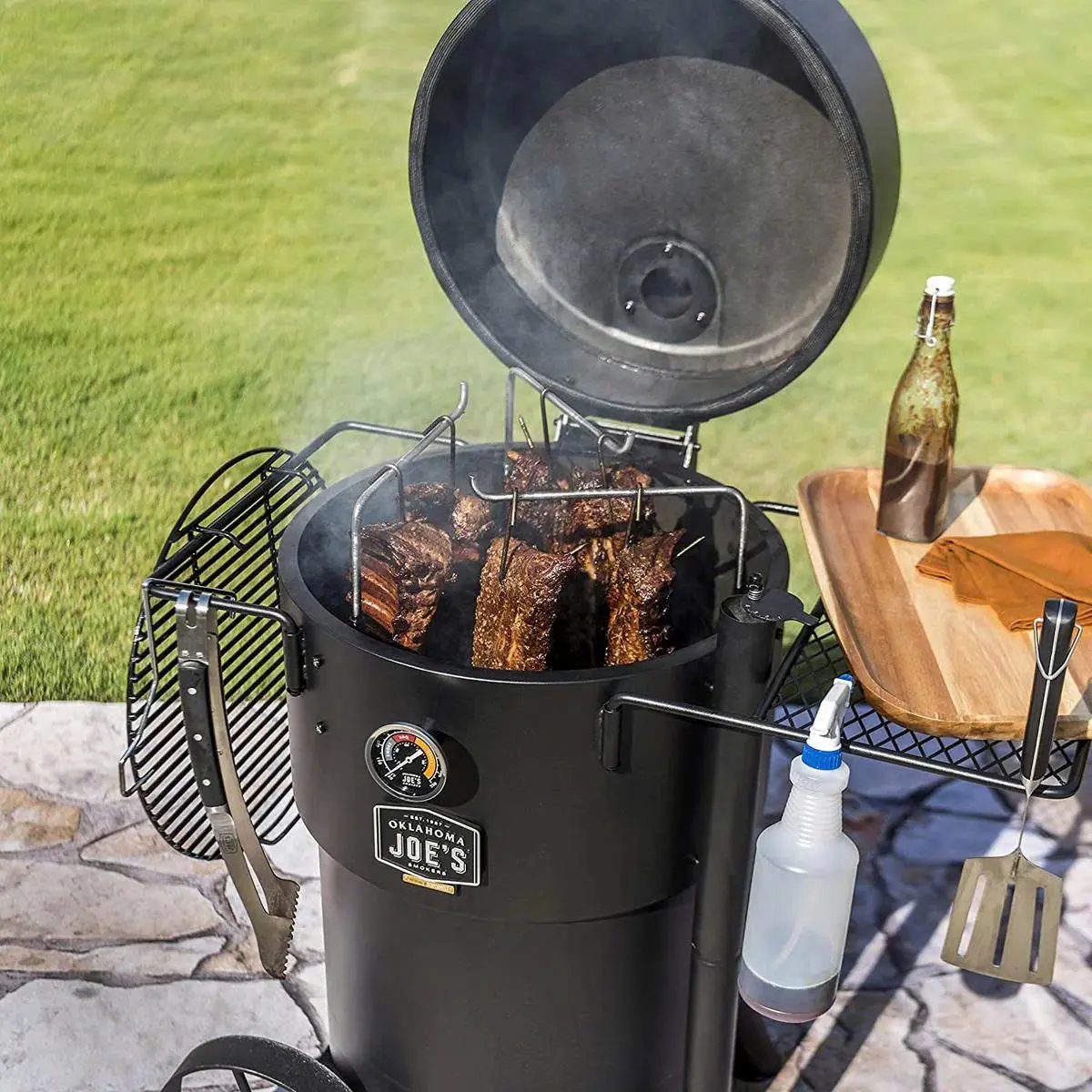
Vertical smokers and drum smokers feature an upright design that helps retain heat efficiently while using less fuel compared to many other smoker types. Thanks to their enclosed structure and shorter airflow path, these smokers are easier to keep at a stable temperature over long cooking sessions.
With their compact footprint, vertical and drum smokers are well suited for backyard BBQ, smaller outdoor spaces, or beginners who are just getting started with Low and Slow cooking. They offer a well-balanced combination of performance, affordability, and convenience.
A drum smoker for customers who love smoked food but have limited, compact space.
Common mistakes when cooking Low and Slow
Low and Slow BBQ may sound simple—just cook slowly at a low temperature—but in reality, a few small mistakes can ruin hours of effort. Below are the most common errors beginners make when applying the Low and Slow technique.
Cooking at too high a temperature
One of the most frequent mistakes is letting the temperature climb too high. Low and Slow requires low, steady heat, typically around 110–120°C (225–250°F). When the temperature is too high, the outside of the meat cooks and dries out before the collagen has time to break down, resulting in meat that’s technically cooked but tough and lacking juiciness.
Opening the lid too often
Many people constantly open the lid to check on the meat, but every lid opening causes heat and smoke to escape. This leads to large temperature fluctuations, longer cooking times, and a less efficient Low and Slow process. In American BBQ, pitmasters often say: “If you’re lookin’, you ain’t cookin’.”
Thick, harsh smoke
Low and Slow requires clean smoke—often referred to as thin blue smoke—not thick white or black smoke. Heavy smoke creates harsh, bitter flavors that cling to the meat and ruin the final taste. This problem is usually caused by poor airflow control or improper wood combustion.
Using the wrong rype of grill
Standard grills are designed for fast, high-heat cooking, making it very difficult to maintain low, stable temperatures for many hours. When using a regular grill for Low and Slow, the cook must constantly manage the fire, deal with temperature swings, and face a much higher risk of failure. This is why serious BBQ enthusiasts eventually switch to BBQ smokers—equipment specifically designed for long cooks and stable temperature control.
Conclusion
Low and Slow BBQ is more than just a cooking technique—it’s a complete experience, where patience, control, and intuition matter as much as the ingredients themselves. The long, slow cooking process is what transforms tough cuts of meat into tender, juicy results infused with authentic smoke flavor.
If you want to recreate true Texas-style BBQ at home, understanding the technique alone isn’t enough. Maintaining stable low temperatures, proper airflow, and clean smoke over many hours requires equipment designed specifically for Low and Slow cooking.
That’s why a BBQ smoker isn’t just another grill—it’s the most worthwhile investment for anyone serious about BBQ. With the right equipment, you can focus entirely on flavor, technique, and enjoyment, instead of constantly fighting temperature and smoke issues.


 Tiếng Việt